

At Hyde Park, the stage is positioned so the performers can see the sun set behind the crowd. Eighty thousand silhouettes, the sky blazing orange and pink above them. It was early September, the last night of the tour. I listened to the band, watched the crowd, felt the rhythm. As we lined up at the end of the show, bowing in unison, I knew I wouldn’t be doing this for much longer.
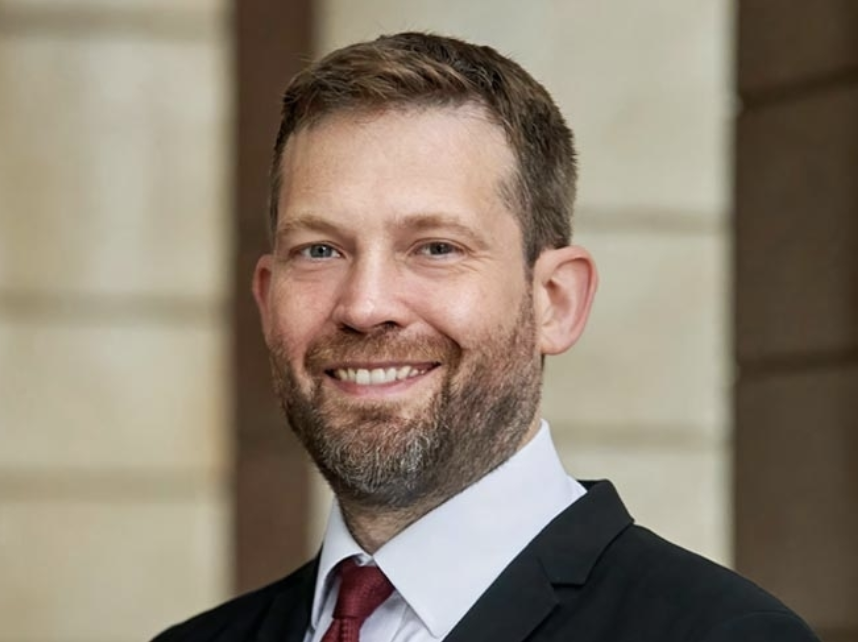
By Samuel Grimley, Barrister, One Essex Court
I was thirty-five. I had been a session musician for over a decade. In that time, I had seen plenty of budget hotels and drab green rooms. To some, my life looked like a success, but only if you stepped back ten paces and squinted. The reality was constant travel, unpredictable income, and a personal life that could not withstand the strain. In my twenties, it felt worth it. In my mid-thirties, it did not.
I could see where it was heading, and I did not like the ending. Even so, the idea of starting again felt absurd. I started, cautiously, with the obvious things: advice, books, and personality tests that promised to identify my “true calling”. I made a list of transferable skills. I could stumble through a jazz standard, write a half-decent pop song, and appear calm on stage when I was terrified. I also had a music degree and a network of extremely talented drunks and drifters. It was not much to work with.
Sometime later – I can’t remember when exactly – I met a friend for lunch. Over the main course, he asked if I’d thought about becoming a lawyer. I choked on my spaghetti. “Absolutely not. Why on earth would anyone want to do that?” He said something about the lurid details of the lives of clients. I can’t remember. It seemed ridiculous.
But it was an idea. I knew a lawyer; perhaps I could talk to him. This lawyer, by then a partner at a City firm, kindly took me to dinner. He told me a story about a young associate who had stopped him in the corridor to gush about how “interesting” she found his specialism. “What exactly interests you?” he had asked her. She stuttered, stumbled, and drew a blank. “You see” he explained to me, “there is nothing interesting about my job”.
He was, however, broadly encouraging. The solicitor route would be the safest; the Bar would mean yet more financial uncertainty. Unless, of course, I became a commercial barrister. “But” he added with a chuckle, “that will never happen”.
I didn’t make the decision to retrain all at once. It would have been too much. Instead, I made a series of smaller decisions: to attend an open evening; to email someone to ask for advice; to enquire about a conversion course. Two days before term started, I enrolled.
I didn’t tell anyone. I worried that if my fellow musicians learned I was studying law, the gigs would dry up. Once term began, I sat at the back of the tour bus, hiding my notes on offer and acceptance. After the shows, while my bandmates drifted to the bar, I slipped quietly to my room to read Caparo v Dickman. I was, to my surprise, starting to enjoy it. Perhaps it was not such a daft idea after all.
Then, in March 2020, the music industry shut down. Every gig, every tour, and every West End show was cancelled. My diary emptied overnight. I suddenly had total freedom to study, but no work at all. When my lease came up for renewal, I had no income to show.
I moved into a camper van the week my final dissertation was due. I submitted it from the back of the van on patchy mobile internet, watching the upload bar falter, fail, and restart. It finally went through with seconds to spare. Sitting there afterwards, in the stillness that follows a narrowly avoided disaster, I realised I had crossed a line. This was no longer an experiment.
Not long after that, I moved to Cambridge to live with a friend, and things stabilised. I applied for everything I could find: pupillage, Inn scholarships, judicial assistant and paralegal roles. I was rejected from all of it. I started delivering water bottles from the back of a van.
Then, one day in March, I got an email from Oxford University. I had applied for the BCL on a whim, fully expecting to be rejected; the website more or less told GDL graduates not to bother. Instead, an offer came through. It was a boost, quickly followed by the obvious problem: I could not afford the fees, still less a year of living costs. I called the faculty to say thank you, but it was probably a “no”.
In June, another email arrived. I had been awarded a scholarship. Since I hadn’t applied for it, it came as a shock. It was hugely encouraging, but it still wasn’t enough. Another month passed, and I was offered a second scholarship. I started selling my guitars. Then, a few weeks before term, a third scholarship came through. I sold my piano, the instrument I had played professionally for fifteen years, and it was just enough.
I could afford to go, but I did not know how I could manage it. My father had dementia and needed care, and I had a young godson I helped to look after. Disappearing for a year was not an option.
Oxford and Cambridge are not far apart on a map, but, in practice, the arrangement appeared unworkable. Keeping a car in Oxford was forbidden for students, and the trains were too slow and too brittle for something that had to happen every week. If I was going to do the BCL without abandoning my responsibilities in Cambridge, I needed a way of getting around quickly and cheaply. A few days before term, with a loan from my family, I bought a 125cc motorbike and completed the compulsory training. For the next year, I rode two hours to Cambridge on Friday afternoon, and two hours back to Oxford on Sunday night. I would spend Saturday with my father, and Sunday with my godson. Monday to Friday, I studied. I rode around 140 miles a week on country roads, often in the dark, on a machine I could barely operate. It was frightening, but it was also the only way it could work.
Oxford was a revelation. I found myself in seminars with academics whose books I had been highlighting and annotating during my law conversion. They expected me to contribute as an intellectual peer, which, for a session pop musician, felt like a stretch. Around the table were students who seemed to have arrived pre-equipped with an instinct for legal argument: quick to spot the point, quick to find the authority for it, and adept at framing it within competing intellectual frameworks.
The workload was relentless. Each week, for each subject, the reading lists claimed every spare hour. The tutorial questions assumed students had not only read the material, but absorbed it, synthesised it, and formulated their own arguments. The standard was exhilarating, but it was also punishing. By the second term, most days, I was simply trying to stay afloat.
Shortly before my final exams, I met the then Dean, Mindy Chen-Wishart. She asked me how I was getting on. When I hesitated, she noted wryly, “the BCL has been demanding the impossible since 1535. If you can get through this, you can do anything.”
By the time I had finished, the Bar seemed plausible.
When pupillage applications opened again, I applied to twenty-five sets. I received nineteen first-round interviews and reached eight second rounds. It was my best result so far. Then the rejections began to arrive, one by one. I was not surprised. I had met some of the other candidates. They were exceptional.
My interview at One Essex Court was in late April. By then, almost every other set had already sent the polite letter: thank you, but no. I assumed I would be rejected again. I decided that if I was going to be rejected, I might as well enjoy it. I went in intending to have fun.
To my surprise, it seemed to go well. My analysis met little resistance. I saw a few nods. I even got a laugh.
On offer day, I collapsed on the floor in relief.
Pupillage was a joy. My supervisors were not only brilliantly clever, but kind, and excellent teachers. They took the time to explain new concepts carefully, to give thoughtful feedback, and to treat me as someone worth investing in. The work was engaging, and for the first time in years I felt like I had found my professional home.
Years earlier, during my law conversion, one of my tutors had declared: “Sam, you are a lawyer who has been moonlighting as a musician for decades.” By the end of pupillage, I started to wonder if she had been right. How strange.
A few months ago, I became a full tenant. I am now a barrister specialising in commercial, competition, and intellectual property law.
People sometimes ask what I have learned. I struggle with the question, not because there were no lessons, but because none of them feel tidy. What I’ve come to understand is that the abilities I spent years developing in music, such as discipline, nerve, and an instinct to keep going when things looked absurd, ended up mattering in ways I couldn’t have anticipated. They didn’t point to some pre‑written path so much as give me the tools to survive one.
The transition itself was anything but clean. It was uncertain, often frightening, and rarely felt like a sensible plan. Even now, there is no guarantee of ease or security. What has changed is simply this: I no longer expect fulfilment to arrive packaged as certainty. It comes, instead, from committing to something difficult, and accepting that the work of becoming the person who can do it doesn’t really end.
Samuel Grimley, Barrister, One Essex Court