
It has long been accepted that professional discipline hearings should be compliant with the European Convention of Human Rights Article 6(1) [right to a fair trial] and the rules of natural justice. Given their role in law enforcement, police officers facing misconduct hearings should be entitled to expect the same rights as those who they take before the courts. However, recent changes to the police misconduct regime arguably mean that even if justice is done, it cannot be seen to be done by an independent tribunal.
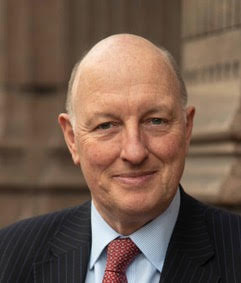
By Nick Hawkins, Barrister, Normanton Chambers
The Police (Conduct) Amendment) Regulations 2024 fundamentally changed the nature of Police Misconduct Hearings. Regulation 3(3) changes the composition of the panel that is to conduct a misconduct hearing, constituted under regulation 28 of the 2020 Regulations. The panel is to comprise a chair, who must be the chief of police of the police force concerned, and two lay members.
This change at the behest of a small number of senior police officers and a former Home Secretary removed Legally Qualified Chairs [LQCs] from the panel, which was henceforth to comprise a chief officer and two independent panel members.
LQCs were first introduced as Chairs in police misconduct hearings on the 1st January 2016. Their introduction was brought about by an amendment to the Police (Conduct) Regulations 2012 namely the Police (Conduct) (Amendment) Regulations 2015 that made provision for LQCs to chair misconduct hearings relating to allegations of gross misconduct arising on or after the 1st January 2016, replacing the senior officer who previously chaired misconduct hearings. In 2020 the case management powers of LQCs were increased and most involved in Panels would say hearings became more efficient as a result.
Criticism of LQCs was based on a misperception that panels with an LQC were less likely to dismiss officers before panels. To dismiss a panel would have to first reach a finding of gross misconduct and then, following the Guidance on Outcomes, issued by the College of Policing would have to consider whether a sanction other than dismissal was the right sanction before concluding that dismissal was the only options. Having chaired numerous panels in around 20 different police force areas, I can confidently say that panels were not reluctant to dismiss officers when it was right to do so and did so in the overwhelming majority of cases in which gross misconduct was found. Reasons for not dismissing officers would be finding the allegations not proven, or that they amounted to misconduct, or where the mitigating factors were such that the officer could be retained. Often in the latter case it would be character references from senior police officers that made the difference. The reasons for not dismissing officers should be obvious, but this did not satisfy those who were critical of LQCs.
It is worth remembering why LQCs were introduced. An Independent Review of
the Police Disciplinary System in England and Wales, conducted by the retired army general Chip Chapman was published in 2014. At paragraph 5.9 he wrote, “I believe a legally qualified chair may be necessary to impart a level of independence where a panel is considering dismissal so that the management in the police can focus upon the restorative outcomes that are necessary below dismissal.” This was formalised in Recommendation 19.
General Chapman served in the army in the 1990s, when the court martial system was challenged in the European Court of Human Rights in the “CASE OF FINDLAY v. THE UNITED KINGDOM”. In February 1997 the Court ruled that an army court martial breached Article 6(1) of the European Convention of Human Rights (the right to a fair trial). In paragraph 76 of the judgement the Court observed, “In order to maintain confidence in the independence and impartiality of the court, appearances may be of importance”.
Prior to the Findlay case courts martial were convened by a senior officer, who appointed the judge advocate, the members of the court [jury] and the prosecutor. Whilst most involved in a court martial at the time would say the hearings were subjectively fair, the appearance may have suggested something else. The UK government of the day acted swiftly, and the Armed Forces Act 1996 separated the functions of prosecutor, court service and senior officer. I had the honour of being the first Naval Prosecuting Authority, independent of the chain of command and free from any pressure from senior officers.
Chip Chapman’s Recommendation 19 corrected the problem in the police service, which was very similar to that ruled in breach of Article 6(1) in the Army. Yet whilst the UK Court Martial system has evolved with even more safeguards for a serviceman facing court martial, the police system has reverted to the pre-2016 system.
To date and to the best of my knowledge there has been no challenge to the fairness or to the appearance of fairness of the 2024 changes. This may be surprising given that an officer facing a Misconduct Hearing has got there as a result of a process when all of the functions come under the command of one person.
Police Officers are normally investigated by the Professional Standards Department of their own force. PSDs are typically headed by a Superintendent or Chief Superintendent answerable to the Deputy Chief Constable who is directly line-managed by the Chief Constable. The decision to refer allegations to a Misconduct Hearing is made by an officer appointed as the Appropriate Authority on behalf of the Chief Constable. Whilst the Independent Panel Members are appointed by the Office of the Police and Crime Commissioner the Chair of the Panel is normally an Assistant Chief Constable, themselves line managed by the same Chief Constable. Thus, the Chief Constable controls the investigation, the decision to prosecute and is the line manager of the Chair of the panel, who has a major say in findings of fact and on sanction.
One of the rules of natural justice is Nemo Iudex in Causa Suas, also referred to as the rule against bias. Within this are the following principles. Impartiality requiring the the deciding body to be independent, impartial, and free from bias (actual or apparent), and the Appearance of Justice where justice must not only be done but must also appear to be done, meaning the appearance of bias is often enough to breach the rule.
Article 6(1) of the ECHR states, “In the determination of his civil rights and obligations or of any criminal charge against him, everyone is entitled to a fair and public hearing within a reasonable time by an independent and impartial tribunal established by law.” This encapsulates the principles set out above.
Reaction to the 2024 changes by the police staff associations was predictably negative. Police Federation discipline representatives saw the previous composition of the Panel as fair and the Superintendents’ Association Panel of Friends had similar views. To date neither body has instructed counsel to argue the Article 6(1) point at a newly constituted Panel. The argument would surely be based on the appearance of fairness, as it would not be sensible to accuse the Chair of bias. However, if I were a police officer facing a panel chaired by an Assistant Chief Constable, who is answerable to the Chief Constable on whose authority the allegations are brought, I would seriously worry about whether I had any chance of leaving the Hearing with my career in tact. This concern would be heightened if I served in one of the police forces whose Chief Constable had expressed strident views about LQCs, or about the need to dismiss every officer accused of gross misconduct – and many Chief Constables have expressed such or similar views.
The public rightly want police officers to uphold the highest standards and there can be no place in any police service for those found to have committed the worst breaches of the standards of professional behaviour. However, the public would expect those officers who need to be dismissed to only be actually dismissed if the case is proved and dismissal is the appropriate sanction. They would also expect the officer to have faced a demonstrably fair hearing.
I conducted my last Misconduct Hearing as LQC in early 2025 and have little or no contact with PSDs or police staff associations. There may well be representations being made to the Home Office that the 2024 changes were not a good idea, but to date the new government (headed by a lawyer known to support the ECHR) has pressed on with the changes introduced by a government of a different political persuasion.
I nonetheless, remain surprised that the new system has not been challenged as set out above, as I believe that an argument that the hearing was an abuse of process due to a breach of ECHR Article 6(1) would have a reasonable chance of success. I would recommend that those involved in representing officers look up the case of Findlay and consider whether they draw the same conclusions that I have set out in this article.
Nick Hawkins, Barrister, Normanton Chambers